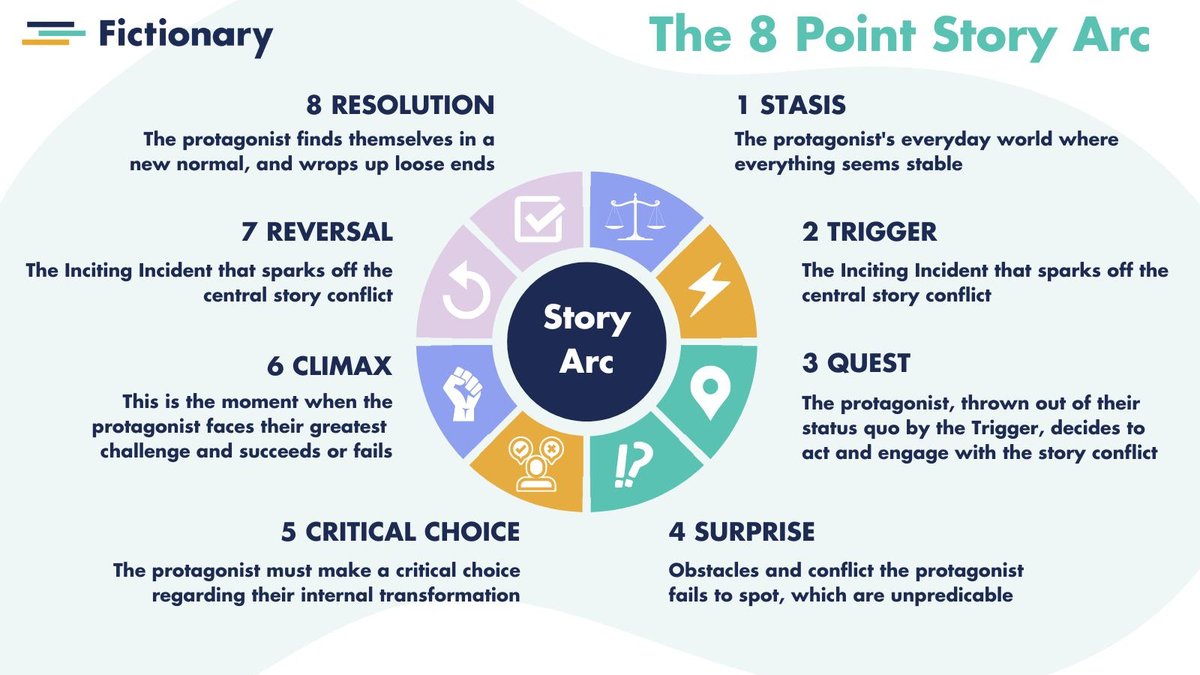
In the vast universe of storytelling, from ancient myths to the latest binge-worthy series, there's an invisible architecture that holds everything together: Key Themes & Story Arcs. These aren't just academic concepts; they're the very heartbeat of narrative, the underlying patterns that make us lean in, gasp, and feel. A compelling story isn't merely a sequence of events; it's a journey of change, a rise or fall in value, meticulously crafted to resonate deeply with our human desire for meaning and pattern.
Think about it: why do some stories captivate us for generations, while others fade into obscurity? Often, it comes down to how skillfully their themes are explored through dynamic story arcs. Mastering this interplay means understanding not just what happens, but why it matters, and how that meaning unfolds over time.
At a Glance: Crafting Irresistible Narratives
- Story arcs define change: They chart how characters or situations evolve (for better or worse) throughout a narrative.
- Six primary patterns: Researchers have identified core arc types like Rags to Riches, Man in a Hole, and Cinderella.
- Values drive change: Arcs measure shifts in fundamental human values like life, love, or accomplishment.
- It's more than plot: Beyond external events, stories have character, relationship, and thematic arcs.
- Core ingredients are key: Every narrative change needs a clear Goal, escalating Obstacles, high Stakes, surprising Reversals, and meaningful Change.
- Don't force it: Often, arcs emerge naturally in later drafts, guided by your story's core value and dilemma.
What Exactly Is a Story Arc, Anyway?
Let's demystify it. At its simplest, a story arc, sometimes called a narrative arc, is the shape of change a story takes from beginning to end. Imagine plotting a character's journey on a graph: the x-axis marks the passage of time, and the y-axis tracks a specific value – perhaps their fortune, happiness, moral standing, or even their very survival. As the story unfolds, that line moves up and down, mapping the peaks and valleys of their experience.
This isn't just about what happens; it's about what changes. While a character's personal growth is often at the heart of an arc (a character arc), not all story arcs are character arcs. A story could track the rise and fall of a kingdom, the success and failure of a mission, or the ebb and flow of a relationship. The critical element is the movement – the quantifiable shift in some defined value over the course of the narrative. This inherent movement is what gives events their meaning and allows us to connect with the narrative on a deeper, more resonant level.
The Foundational Six: Unpacking Universal Story Arcs
For centuries, storytellers have intuitively understood certain narrative patterns. But in a fascinating study, researchers Andrew Reagan and the University of Vermont crunched the data on 4,000 novels, scientifically identifying six primary story arcs that appear again and again. Understanding these isn't about rigid adherence, but about recognizing the fundamental shapes that resonate with audiences.
Let's break them down:
1. Rags to Riches: The Continuous Ascent
This arc is exactly what it sounds like: a steady, continuous upward climb. A protagonist starts in a low, undesirable state and, through effort, luck, or destiny, steadily improves their situation, culminating in a happy ending. Think of it as a triumphant march towards success.
- Pattern: Rise
- Examples: Disney's Tangled sees Rapunzel escape her tower and find her true family and love. Jane Austen's Pride and Prejudice follows Elizabeth Bennet from a prejudiced view and limited prospects to a loving, respected marriage. The ever-resourceful Matilda, in Roald Dahl's classic, overcomes adversity to find a loving home and fulfilling life.
- Why it resonates: It taps into our hope for progress and reward, a belief that hard work or inherent goodness can lead to a better life. While perhaps not the most popular, its feel-good nature makes it enduring.
2. Riches to Rags: The Inevitable Downfall
The mirror image of "Rags to Riches," this arc charts a continuous downward trajectory. A protagonist starts in a privileged or successful position only to experience a steady decline, often leading to ruin or a tragic end. This arc frequently explores themes of hubris, moral decay, or the crushing weight of external forces.
- Pattern: Fall
- Examples: J.D. Salinger's Catcher in the Rye depicts Holden Caulfield's spiraling mental state and alienation. George Orwell's Animal Farm shows the initial revolutionary ideals descend into a brutal totalitarian regime. Oscar Wilde's The Picture of Dorian Gray illustrates a man's moral decay mirroring the corruption of his hidden portrait.
- Why it resonates: It serves as a cautionary tale, often used to explore complex issues like addiction, mental health struggles, or the corrupting nature of power, forcing readers to confront uncomfortable truths.
3. Man in a Hole: The Dip and Recovery
One of the most highly rated and common arcs, "Man in a Hole" sees the protagonist fall into a difficult, often desperate, situation, only to find a way out and recover their standing. It's a classic tale of overcoming adversity.
- Pattern: Fall then Rise
- Examples: Bilbo Baggins in The Hobbit is pulled from his comfortable life into a perilous journey, facing dragons and goblins before returning home a changed hero. Alice in Wonderland tumbles down the rabbit hole into a chaotic world before finding her way back. In Disney's Monsters, Inc., Sulley and Mike fall into a literal hole of trouble after a child enters their world, only to rise as unlikely heroes.
- The "Double Man in a Hole": An especially popular variation, this arc features two sequential fall-then-rise patterns, often leading to very satisfying happy endings. Think of the multiple challenges and triumphs in Harry Potter and the Prisoner of Azkaban or the emotional rollercoaster faced by Simba in The Lion King. This structure keeps audiences engaged through repeated challenges and eventual victories.
4. Icarus / Freytag's Pyramid: The Soaring Fall
Named after the Greek myth of Icarus, who flew too close to the sun, this arc depicts a rise in fortune or status followed by a significant and often catastrophic fall. It's a structure frequently favored by literary writers and classics, often culminating in a poignant or tragic ending. It also closely mirrors Gustav Freytag's classic dramatic pyramid structure.
- Pattern: Rise then Fall
- Examples: Katniss Everdeen in The Hunger Games achieves fame and status as a victor, only to be thrust into greater danger and rebellion. Shakespeare's Macbeth rises to become king, but his ambition leads to his ultimate downfall. The ill-fated Titanic embarks on a grand journey, achieving a peak of luxury and romance before its tragic end. Jay Gatsby in The Great Gatsby builds immense wealth and throws lavish parties, only to see his aspirations crumble.
- Why it resonates: It explores themes of ambition, the transient nature of success, and the consequences of one's actions, often evoking strong emotions of pity or fear.
5. Cinderella: The Classic Underdog Story
A widely recognized and beloved arc, especially prevalent in romance, sports narratives, and, of course, Disney films. The "Cinderella" arc is characterized by an initial rise, followed by a fall, and then a final, triumphant rise. This pattern often aligns beautifully with the well-known Hero's Journey framework, offering a journey of initial promise, significant challenge, and ultimate redemption.
- Pattern: Rise then Fall then Rise
- Examples: In Disney's Frozen, Elsa's powers are revealed, leading to a period of isolation and struggle (the fall) before she learns to control them and embraces her role as queen (the rise). Jane Eyre sees its protagonist rise from difficult beginnings, experience emotional turmoil and separation, then finally find love and self-acceptance. And Disney's Aladdin embodies this arc, rising to princely status, falling due to Jafar's machinations, and finally rising as a true hero.
- Why it resonates: It's incredibly satisfying, offering a journey through adversity to a hard-won happy ending, reinforcing beliefs in perseverance and inner strength.
6. Oedipus: The Tragic Cycle
Named after the Greek tragedy, this is a complex and often difficult, yet highly compelling, structure. The "Oedipus" arc involves an initial fall, a subsequent recovery or rise, and then a final, often more devastating, tragic fall. It's a powerful arc for exploring profound themes of fate, human flaw, and inescapable consequence.
- Pattern: Fall then Rise then Fall
- Examples: Herman Melville's Moby Dick sees Captain Ahab's quest take a dark turn, finding momentary success in his pursuit, only to be consumed by his obsession. Mary Shelley's Frankenstein follows Victor Frankenstein's initial ambition leading to creation, a period of perceived success, only for his hubris to result in ultimate despair. Shakespeare's Hamlet navigates a complex journey of grief and revenge, seeing moments of perceived triumph before a final, tragic undoing. Gillian Flynn's Gone Girl masterfully uses this structure to explore psychological manipulation and a relationship's toxic demise.
- Why it resonates: Despite its often grim conclusion, this arc challenges readers, leaving them with powerful questions about humanity and destiny, and often topping lists of highly-read and discussed works.
Beyond the Shape: What Drives an Arc's Movement? (The Value System)
While the six primary arcs describe the shape of change, understanding what is changing is equally crucial. A story arc's rise and fall are always measured against specific values. As Shawn Coyne brilliantly articulates in The Story Grid, these values often align with Maslow’s Hierarchy of Human Needs, providing a universal framework for understanding what's at stake.
Here are the six core values that stories frequently explore, oscillating between one extreme and its opposite:
- Life vs. Death (Physiological): The most fundamental value. Is the character alive or dead? Is their survival at stake?
- Example: In Gravity, the entire narrative arc hinges on Dr. Ryan Stone's struggle for survival against the indifference of space, a continuous battle between life and certain death.
- Life vs. a Fate Worse Than Death (Safety): Survival isn't enough; sometimes, the threat is to freedom, bodily autonomy, or sanity.
- Example: A prisoner of war might escape death only to face torture, a "fate worse than death."
- Love vs. Hate (Love/Belonging): The presence or absence of connection, intimacy, and belonging.
- Example: A romantic comedy charts the journey from initial animosity or indifference to deep affection.
- Accomplishment vs. Failure (Esteem): Success or failure in achieving a goal, gaining recognition, or proving oneself.
- Example: A sports movie follows a team's arc from repeated losses to a championship victory.
- Maturity vs. Naiveté (Self-Actualization): A character's growth in understanding, wisdom, and self-awareness.
- Example: A coming-of-age story shows a young protagonist shedding innocence for mature understanding.
- Right vs. Wrong (Transcendence): The moral compass of the story, often exploring justice, ethics, or spiritual enlightenment.
- Example: A legal drama often centers on the fight to uphold justice against corruption.
Every story, even those with multiple arcs, typically has one core value that defines its main arc. Keeping this primary value clear prevents your narrative from becoming muddled. When your protagonist acts, they are either moving towards the positive expression of this value or away from it, driving the up and down movement of the arc.
The Core Mechanics: What Makes Narrative Change Happen?
A story arc isn't just a predefined shape; it's constructed from five essential elements that interact dynamically to create meaningful change. Think of them as the fundamental building blocks for any compelling narrative.
- A Goal: What does your character want? A goal is the specific, tangible (or deeply internal) objective a character is actively pursuing. It needs to be clear, important, and provide direction for their actions. Is it to escape a dangerous situation, win someone's affection, or uncover a hidden truth? Without a goal, there's no journey.
- Obstacles: What stands in the way? Obstacles are the challenges, conflicts, and difficulties that prevent the character from achieving their goal. They can be external (a formidable villain, a natural disaster, societal prejudice) or internal (self-doubt, a moral failing, a hidden fear). Crucially, obstacles must escalate in severity, forcing the character to adapt, grow, and make difficult choices.
- Stakes: What happens if they fail? Stakes are the potential consequences of failure, providing urgency and emotional investment. They exist on multiple levels: physical (death, injury), emotional (heartbreak, despair), social (exile, public shame), moral (loss of integrity), and even spiritual (loss of faith). The stakes must be personal to the character and also escalate with the obstacles, ensuring that every beat matters.
- Reversals: What turns the story on its head? Reversals are plot twists, unexpected revelations, or sudden shifts in circumstances that change the context of the story. They keep readers engaged by subverting expectations, raising the stakes even higher, and complicating the path to the goal. A good reversal should feel surprising yet, in retrospect, inevitable, weaving seamlessly into the narrative fabric.
- Change: What's different by the end? This is the fundamental transformation that makes a narrative meaningful. It could be a change in the character themselves (internal), their situation (external), their relationships, their knowledge, or the prevailing values of their world. This change must be earned through the struggles and choices of the character, specific and demonstrable, significant in its impact, and often irreversible, leaving a lasting mark.
These five ingredients don't operate in isolation; they are deeply interconnected. An escalating obstacle might trigger a reversal, which in turn raises the stakes, forcing the character to make a difficult choice that ultimately leads to profound change. This interwoven dance is what gives a story arc its power and resonance.
Weaving the Threads: Different Types of Narrative Arcs in Play
While the "six primary arcs" offer macro patterns, most rich narratives employ several types of arcs simultaneously, creating a multi-layered experience. Understanding these categories helps you manage complexity and depth in your storytelling.
- Plot Arc: This is the most visible arc, tracking the external events, conflicts, and resolutions of the main storyline. It often aligns with the overall "value shift" discussed earlier (e.g., a "Man in a Hole" plot arc).
- Character Arc: This explores the internal journey of a protagonist (or antagonist). It's about their psychological, emotional, and moral transformation. A character might go from selfish to selfless (positive arc), from hopeful to cynical (negative arc), or remain steadfast in their core beliefs (flat arc) while the world around them changes.
- Relationship Arc: This arc charts how the connections between characters evolve. Think of a friendship that deepens through shared adversity, a romance that navigates challenges to find stability, or a rivalry that transforms into mutual respect.
- Thematic Arc: This isn't about a character's journey, but about how the story explores a central question, idea, or set of values. The narrative acts as a debate, presenting different perspectives on a theme (e.g., justice, freedom, love) and perhaps offering a resolution or a more nuanced understanding by the end.
- Series Arc: For stories spanning multiple installments (like novels in a series or seasons of a TV show), a series arc provides overarching continuity. It allows for larger, more gradual transformations in characters or world-states. While individual episodes or books might have their own smaller arcs, the series arc provides the long-term destination. For instance, consider the many individual adventures in a long-running show, but how each contributes to a larger progression, as seen in The Next Generation Season 1 and beyond, where individual challenges build toward a greater understanding of the universe and self.
Most narratives, especially novels and feature films, don't just have one arc. They typically feature a main plot arc, an internal character arc, and at least one significant subplot, each with its own rhythm of rise and fall. Short stories, by necessity, usually focus on a single, impactful arc. Epics and long-running series, on the other hand, become intricate tapestries of dozens of interconnected arcs, weaving together individual episode arcs, season arcs, and overarching series arcs.
Architecting Your Narrative: Popular Frameworks for Story Arcs
While the six primary arcs describe the pattern of change, narrative frameworks provide blueprints for structuring that change. They offer practical guidance on pacing, plot points, and character development, ensuring your arc unfolds effectively.
The Three-Act Structure
This is perhaps the most fundamental and widely recognized dramatic structure, dividing a story into three distinct phases:
- Act I: Setup (~25% of story): This act introduces the world, the characters, and establishes the normal state of affairs.
- Exposition: Background information necessary to understand the story.
- Inciting Incident: The event that disrupts the protagonist's ordinary world, setting the main conflict in motion and launching them on their journey.
- Act II: Confrontation (~50% of story): The longest act, where the protagonist actively pursues their goal, facing escalating obstacles and complications.
- Rising Action/Progressive Complications: The protagonist encounters increasing challenges, testing their resolve and forcing them to adapt.
- Dilemma: A critical choice point, often marking the turning point or midpoint of the arc, where the protagonist faces a difficult decision with significant consequences. This frequently aligns with the peak or lowest point of an arc's value shift.
- Act III: Resolution (~25% of story): The climax and aftermath, where the main conflict is resolved.
- Climax: The point of highest tension and conflict, where the protagonist confronts the ultimate obstacle and makes their final, decisive move. This is where the story's core value is at its absolute peak or lowest ebb, leading to a definitive resolution.
- Denouement: The "untying" of loose ends, showing the new normal and the aftermath of the climax, demonstrating the lasting change brought about by the arc.
More complex narratives, particularly series, can be understood as combining multiple three-act structures. A season might have its own three acts, composed of individual episodes that also follow smaller three-act rhythms, stacking up to sophisticated nine, twelve, or even twenty-seven act structures.
The Hero's Journey (Joseph Campbell)
A mythic template describing the universal stages of transformation, particularly for a character arc. While often cited for epic quests, its core principles apply to any journey of self-discovery. It includes steps like:
- The Call to Adventure: The inciting incident that disrupts the hero's ordinary world.
- Meeting the Mentor: A wise figure offers guidance and tools.
- Crossing the Threshold: The hero commits to the adventure, entering a new world.
- The Ordeal: The central conflict and ultimate test, often a "death and rebirth" moment.
- Return with the Elixir: The hero returns to the ordinary world, transformed and bringing a boon to their community.
The Hero's Journey often underpins "Cinderella" or "Man in a Hole" arcs, providing a detailed pathway for the character's internal and external movements.
Save the Cat Beat Sheet (Blake Snyder)
A popular 15-beat structure for pacing and plotting, often used in screenwriting but applicable to any narrative. It provides specific plot points and page counts for where major shifts should occur. Key beats include:
- Opening Image: The "before" picture of the protagonist's world.
- Catalyst: The inciting incident.
- Midpoint: A false victory or false defeat that raises the stakes significantly.
- All Is Lost: The lowest point, where everything seems hopeless.
- Dark Night of the Soul: The moment of reflection and despair before the final push.
- Finale: The resolution, where the protagonist executes the plan learned during the "Dark Night."
These frameworks aren't meant to be rigid handcuffs, but rather flexible tools to help you identify weaknesses, strengthen pacing, and ensure your story's arc is satisfyingly shaped.
Building Your Arc: Practical Steps for Writers
Understanding theory is one thing; applying it is another. Here's how to consciously, yet organically, build and refine the Key Themes & Story Arcs in your own work.
1. Ensure Movement: Static is Not Story
The most fundamental rule: your story must change. If your characters, their situation, or the core values they embody remain exactly the same from beginning to end, you don't have a story arc; you have a slice of life. While slice-of-life pieces have their place, they lack the inherent drive and emotional payoff of a story arc. Identify what needs to shift, rise, or fall by the time your narrative concludes.
2. Don't Force the Arc in the First Draft
For many writers, especially discovery writers (pantsers), trying to rigidly map an arc onto a first draft can stifle creativity. Instead, focus on telling the story, letting your characters pursue their goals and react to obstacles. The arc often emerges organically as you write. However, if you're starting with a formless idea, using an arc template (like "Man in a Hole" or "Cinderella") can provide a useful structural scaffold to get you going.
3. Discover Your Core Value Early
Identify the main value your story is exploring – is it life vs. death? Love vs. hate? Accomplishment vs. failure? Pinpointing this central conflict of values will simplify your narrative choices. Every major plot point and character decision should ideally push the story's main arc either towards the positive or negative manifestation of this core value. Keep it simple; trying to juggle too many primary values can muddle your message.
4. Consider Genre and Form Conventions
Different genres and forms often come with implicit expectations for their arcs. Novels and films typically feature a main arc and several sub-arcs, often following a three-act structure. Short stories usually focus on a single, impactful arc due to their brevity. Sitcoms might have 2-3 smaller arcs per episode, feeding into a larger season arc. Knowing these conventions helps you fulfill reader expectations while also giving you the tools to subvert them deliberately.
5. Write Toward the Dilemma and Climax
Once you have a general sense of your arc, identify its critical turning points. For many arcs, this will be the dilemma – the moment where your character faces a crucial, often moral, choice that dictates the path of their fall or rise. This choice should escalate the stakes significantly. Then, build towards the climax – the ultimate confrontation where the core value is most acutely at stake and the main conflict is resolved, defining the arc's final resting place. Everything in your rising action should be designed to push your character towards this inevitable, high-stakes choice and subsequent confrontation.
6. Enhance Arcs in the Second Draft (and Beyond)
Your first draft is about getting the story down. Your subsequent drafts are where you truly sculpt and polish. Once you have a complete narrative, go back and explicitly map out your story's various arcs (plot, character, relationship, thematic).
- Look for gaps: Are there places where the movement feels flat or unearned?
- Strengthen peaks and valleys: Can you make the falls more devastating, the rises more triumphant?
- Ensure consistency: Does the arc make sense in terms of the core value?
- Smooth transitions: Do the shifts from rising to falling, or vice-versa, feel organic?
- Layer meaning: How do your character arc, plot arc, and thematic arc reinforce each other?
This iterative process of discovery and refinement is where the magic happens, transforming a good story into a truly great one.
Common Questions & Misconceptions About Story Arcs
Even seasoned writers sometimes grapple with the nuances of story arcs. Here are a few common queries and clarifications:
Q: Are story arcs the same as plot?
A: Not quite. Plot refers to the sequence of events that happen in a story. A story arc refers to the change in value that results from those events. The plot drives the arc, but the arc gives meaning to the plot. You can have a character do many things (plot), but if they don't change or if their situation doesn't fundamentally shift in a meaningful way (arc), the story feels static.
Q: Do all stories need an arc?
A: Most compelling narratives do. Humans are wired to seek pattern and meaning in change. A story without an arc can feel aimless or unsatisfying. While some experimental or purely descriptive works might forgo a traditional arc, if you want to create a sense of progress, character development, or resolution, an arc is essential. Even a "flat arc" character (one who doesn't change internally) usually causes change in others or their environment, fulfilling a different kind of arc.
Q: How many arcs should my story have?
A: It depends on the length and complexity. Short stories usually focus on one strong arc. Novels and films typically have a main plot arc, a character arc for the protagonist, and often one or two significant sub-arcs (e.g., a relationship arc or a secondary character's arc). Epics or series can have many, many interwoven arcs. The key is to ensure each arc serves a purpose and contributes to the overall narrative, without overwhelming the reader. Prioritize your main arc and its core value, then layer others thoughtfully.
Your Next Steps: Applying These Insights to Your Craft
Armed with a deeper understanding of Key Themes & Story Arcs, you're ready to elevate your storytelling. This isn't about formulaic writing; it's about conscious design, about building narratives with intention and impact.
Whether you're outlining a new project or revising an existing one, take these actionable steps:
- Identify Your Core Value: What is the primary value your story explores? Life, love, justice, wisdom? And what is its opposite? This will define the "y-axis" of your main arc.
- Sketch Your Arc's Shape: Which of the six primary arcs best fits the journey you envision for your protagonist or central conflict? Even if it's a rough idea, having a general shape (fall then rise, continuous fall) will guide your plot points.
- Outline Your Five Core Ingredients: For your main arc, clearly define the character's Goal, the escalating Obstacles, the personal Stakes, potential Reversals, and the ultimate Change you want to see.
- Map Key Frameworks: Use the Three-Act Structure (or Hero's Journey, Save the Cat) to plot your major beats: Inciting Incident, Dilemma, Climax, and Denouement. Ensure these points align with the significant shifts in your arc's value.
- Review for Depth: Once you have a draft, examine your character, relationship, and thematic arcs. Are they compelling? Do they intertwine effectively? Do they reinforce the main message of your story?
By approaching your craft with this strategic understanding of themes and arcs, you're not just telling a story; you're crafting an experience that will deeply resonate, leaving your readers with more than just a memory of events, but a profound sense of meaning and transformation. Go forth and write narratives that truly move people.